
The Young Scientists Network–Academy of Sciences Malaysia (YSN-ASM), in collaboration with UCSI University, successfully organised the Responsible Conduct of Research (RCR) Workshops on 28 and 31 July 2026 at UCSI University, Kuala Lumpur Campus. The workshop brought together 60 participants, comprising undergraduate and postgraduate students, postdoctoral research fellows, and lecturers from UCSI University, with the aim of fostering a stronger culture of research integrity, ethical responsibility, and good research practices.
The workshop was led by four trainers who are YSN-ASM members and affiliates from UCSI University: Assistant Professor Ts Dr Michelle Teo Yee Mun, Associate Professor Ts Dr Eugenie Tan Sin Sing, Associate Professor Dr Chew Yik Ling, and Assistant Professor Dr Nurliyana Binti Abdul Razak. The sessions were supported by facilitators Assistant Professor Ts Dr Lee Yu Zhao, Dr Phuna Zhi Xin, Assistant Professor EUR ING Ts Dr Thung Wei Eng, and Assistant Professor Dr Lam Ming Quan (UTAR).
Through interactive discussions, group activities, and scenario-based learning, participants explored three key areas: Ethical Values and Responsibilities of Researchers, Research Misconduct and Data Management, and Mentor–Mentee Relationships. Rather than relying solely on conventional lectures, the workshop encouraged active participation, critical thinking, and reflection on ethical challenges encountered throughout the research journey.
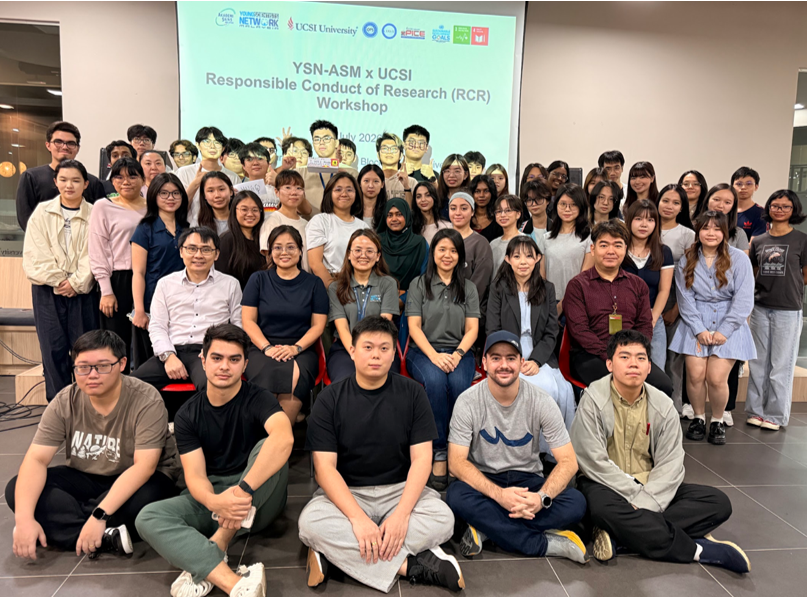
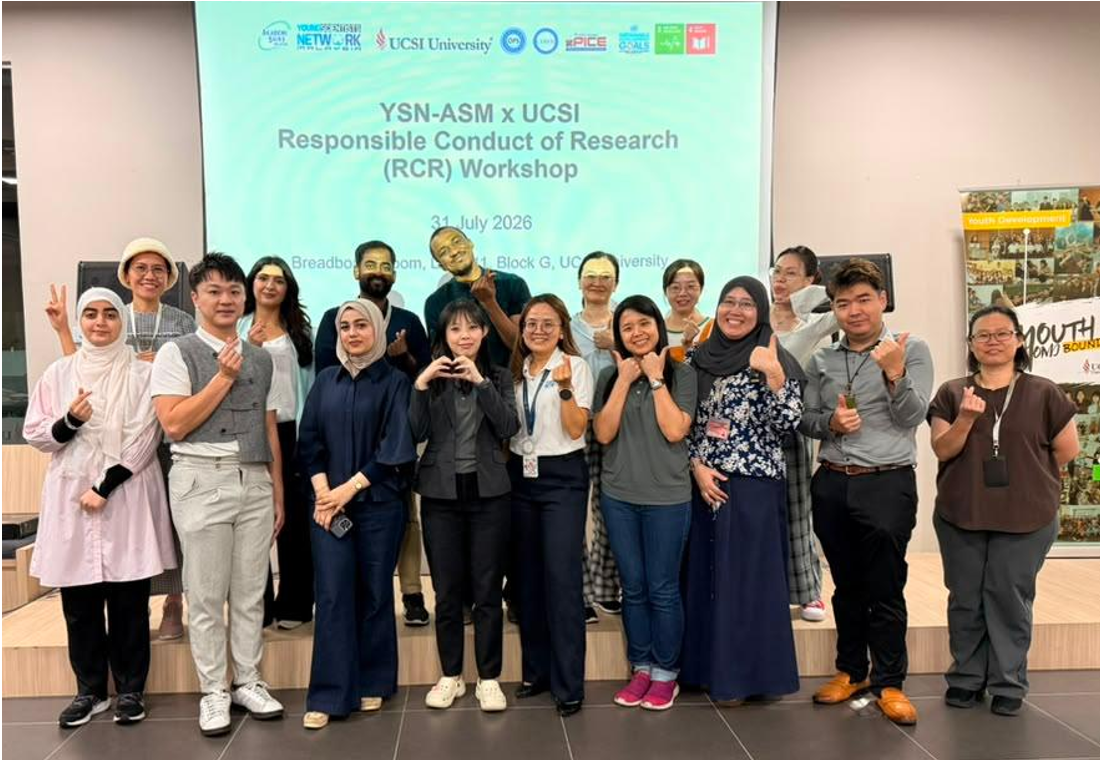
Participants and workshop trainers coming together to promote a shared commitment to research integrity, ethical responsibility, and good research practices.
Learning Beyond the Classroom: Participants’ Experiences
Feedback from participants highlighted the workshop’s engaging and practical approach to learning research ethics. The interactive activities provided opportunities for participants from different academic backgrounds to exchange perspectives, collaborate, and apply ethical principles to real-world research situations.
Lee Yik Hung, an undergraduate Biotechnology student, appreciated the workshop’s departure from traditional teaching methods. He highlighted that the interactive activities encouraged critical thinking and helped participants understand how responsible research principles could be applied in practice. The experience broadened his understanding of the importance of conducting research responsibly.
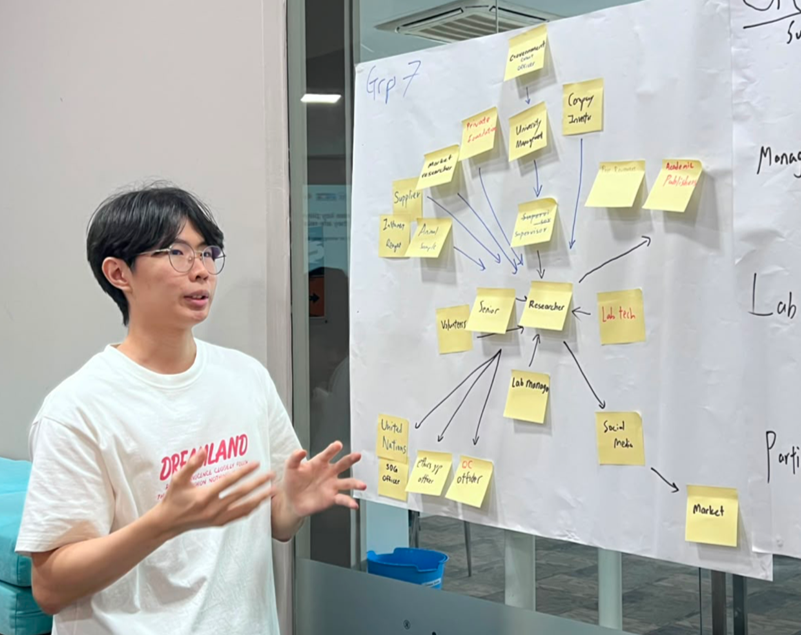
A participant presenting a collaborative mind map, demonstrating how interactive activities encourage critical thinking and deeper understanding of responsible research practices.
Similarly, Abdulhakeem Atrakche, a Master’s student in Pharmaceutical Technology, described the workshop as a memorable and enriching academic experience. He particularly enjoyed the collaborative activities, including developing mind maps, illustrating examples of research fabrication, falsification, and plagiarism, and discussing expectations in supervisor–student relationships. These activities not only strengthened his understanding of research ethics but also encouraged meaningful interactions with fellow participants.
Highlighting the practical impact of the workshop, Duha Mansoor Mohammed Jorani, an MSc student in Biotechnology, shared how the knowledge gained has positively influenced her research practices. She noted that the workshop strengthened her understanding of research ethics, data integrity, and good research practices, enabling her to apply these principles directly to her own research. In particular, she has become more conscious of responsible data handling and ethical considerations throughout the research process, demonstrating how the workshop’s lessons extend beyond the training sessions into everyday research activities.
Madeline Widjaja Tandibrata, an i3L intern at UCSI University, described the workshop as an eye-opening experience that made research misconduct easier to recognise and understand. She particularly valued the practical explanations of fabrication, falsification, and duplication, which connected ethical principles to real-life laboratory practices. Her reflection underscored an important takeaway from the workshop: research integrity goes beyond following established rules; it involves cultivating honest research habits and safeguarding public trust in science.
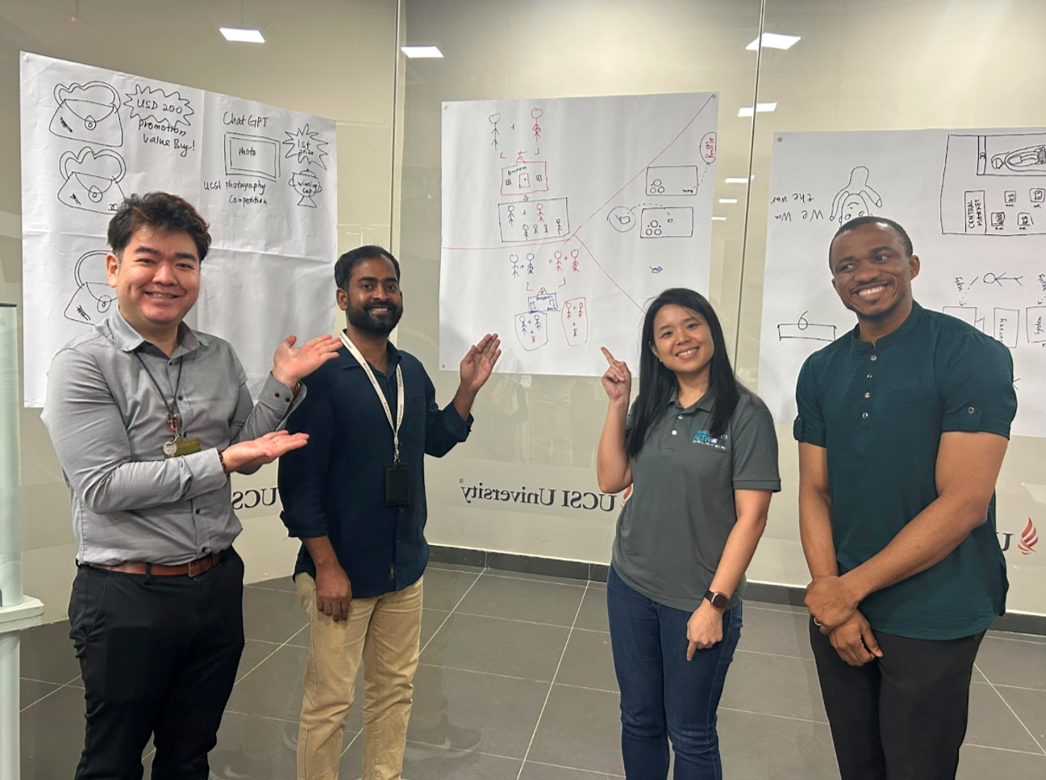
Participants showcasing their collaborative work through creative visual presentations, translating research ethics concepts into practical learning experiences
From an educator’s perspective, S M Topazal, Assistant Lecturer at UCSI University’s Institute of Computer Science and Digital Innovation, highlighted the workshop’s relevance in addressing contemporary research integrity challenges, particularly research fabrication, falsification, and the responsible use of AI-generated content in academic research. He emphasised the importance of such initiatives in promoting academic honesty, transparency, critical thinking, and trust within the scientific community.
Collectively, the participants’ reflections demonstrated that research integrity is best cultivated not merely through awareness of ethical guidelines, but also through active discussion, critical reflection, and responsible decision-making.
Cultivating a Culture of Research Integrity
The YSN-ASM x UCSI RCR Workshop 2026 reinforced the importance of embedding ethical values at every stage of the research process. By bringing together emerging researchers and experienced academics in a collaborative learning environment, the initiative provided a valuable platform for nurturing responsible research practices and strengthening mentor–mentee relationships.
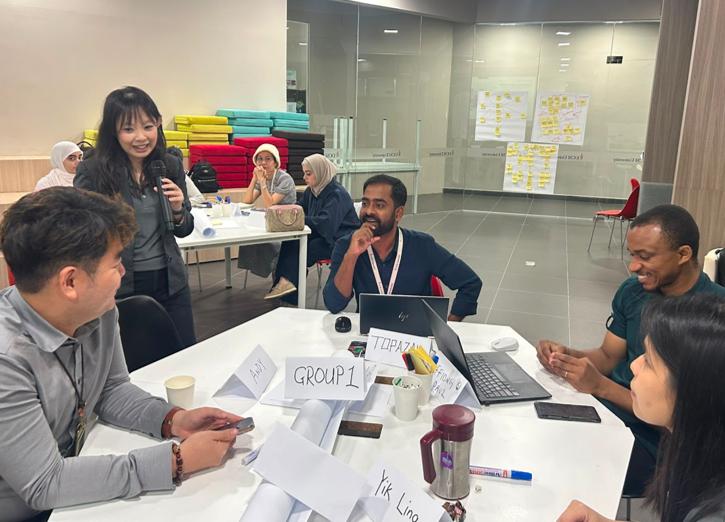
Participants engaging in an interactive group discussion, exchanging perspectives and exploring ethical challenges in responsible research practices.
Beyond developing knowledge, the workshop encouraged participants to recognise their individual responsibilities in maintaining the credibility, transparency, and trustworthiness of scientific research.
Through continued initiatives such as the RCR Workshop, YSN-ASM and UCSI University reaffirm their shared commitment to nurturing a new generation of researchers who uphold the highest standards of scientific integrity and contribute responsibly to the advancement of knowledge.
Prepared by:
Associate Professor Dr Chew Yik Ling


0 Comments